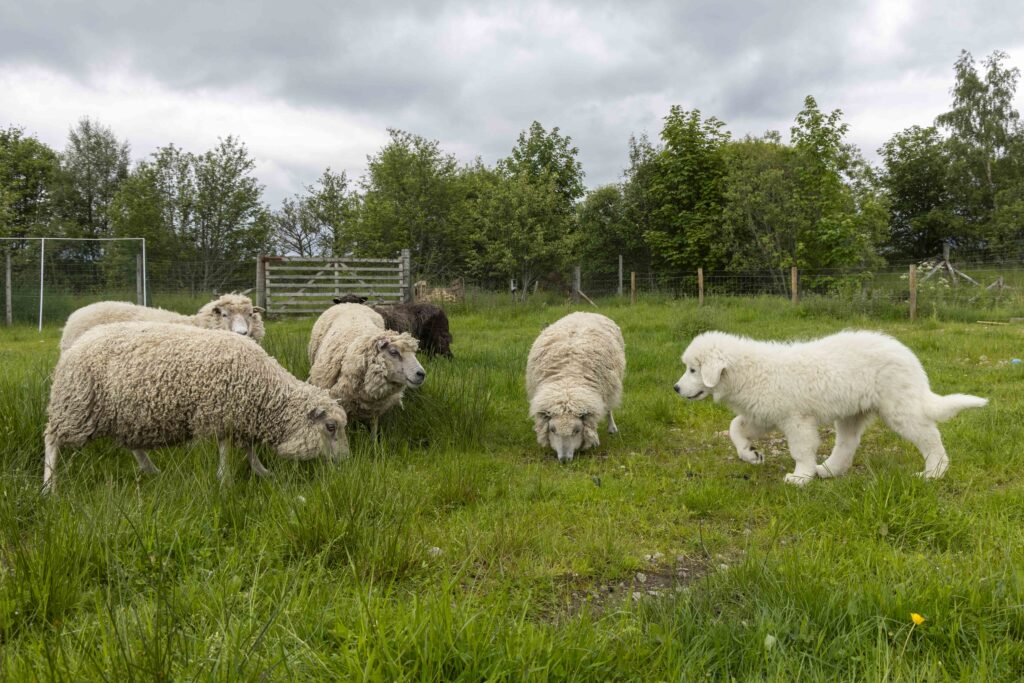
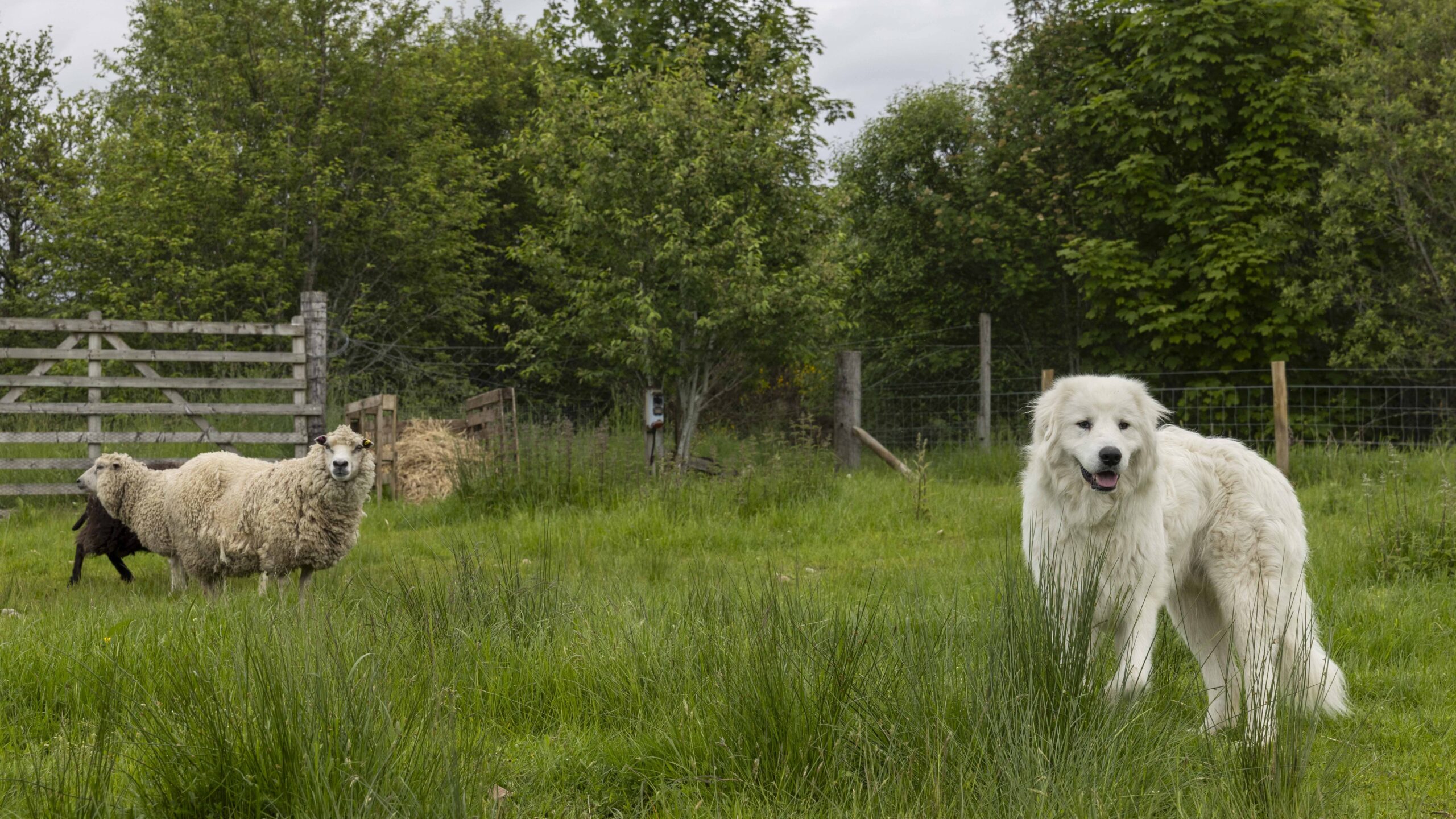
In Scotland, we are learning to live with expanding wildlife populations, including sea eagles, beavers, wild boar, and wildcats.
These species play a vital role in restoring ecosystems and building climate resilience, while also opening new social and economic opportunities. At the same time, their recovery brings significant challenges, particularly for land managers.
Our role is to help find solutions to these challenges, to enable local communities to live alongside – and benefit from – the wildlife on their doorstep.
Our story
Wildlife Canny Solutions works collaboratively with diverse stakeholders to co-create practical solutions to human-wildlife conflict. We also seek to address the tensions that arise when species that are highly valued by wider society, create impacts at the local level.
Wildlife Canny Solutions was conceived by a small group in the Cairngorms, who share the belief that traditional farming livelihoods and recovering wildlife populations can coexist. Through our accumulated experiences of working with livestock, local community and conservation organisations, we have witnessed how relationships break down when people feel marginalised, and how this often leads to unsatisfactory outcomes for all. We value local knowledge, lived experience, respectful listening, and diverse views. We endeavour to learn from those affected by the challenges brought by recovering wildlife populations, to co-create lasting, affordable, practical solutions.
Meet the team:
Alice Bacon
Alice grew up in an Aberdeenshire crofting community, immersed in the values of sheep farming, game bird rearing and wildlife conservation. Since becoming a vet in 2009, she has worked for rural communities in the Western Isles, Shetland and across the Highlands, supporting traditional farming practices. Alice’s first-hand experience of livestock predation by wildlife, alongside her understanding of ecology, animal behaviour and livestock husbandry, led to a desire to find practical solutions to the challenge of livestock-wildlife coexistence.
Jonny and Daisy Ames
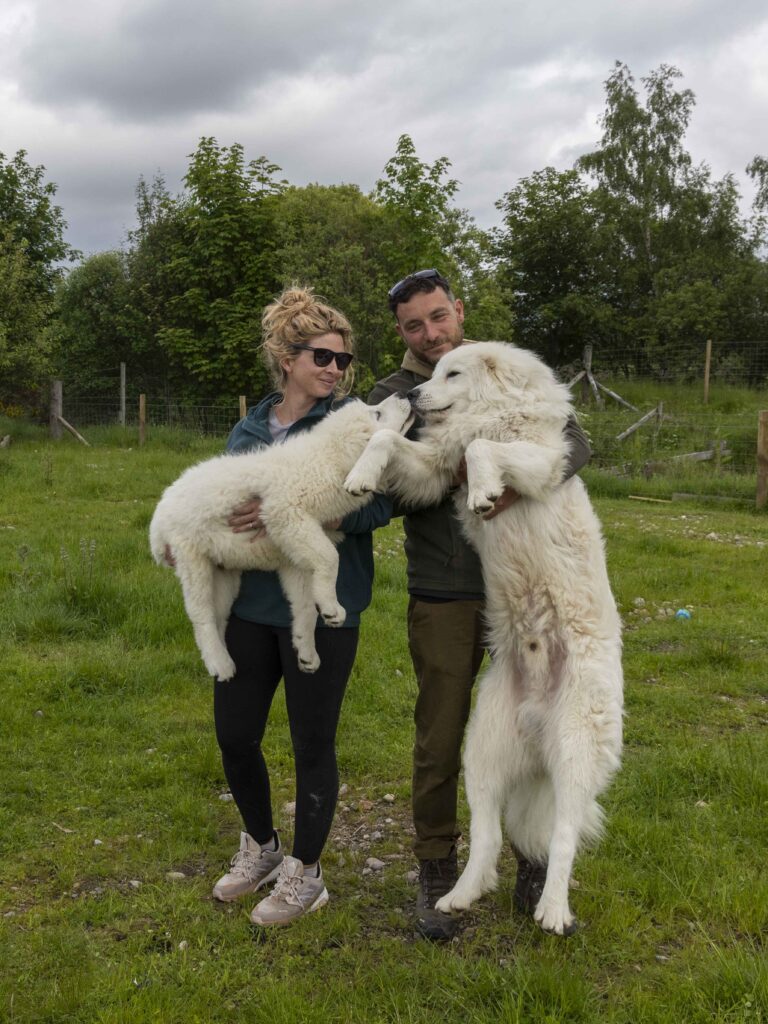
Since 2007, Jonny and Daisy have been working in bird of prey centres in both the UK and Africa. The couple now live in the Scottish Highlands, where they’ve set up The Highland Falconry Centre, with a focus on wildlife education.
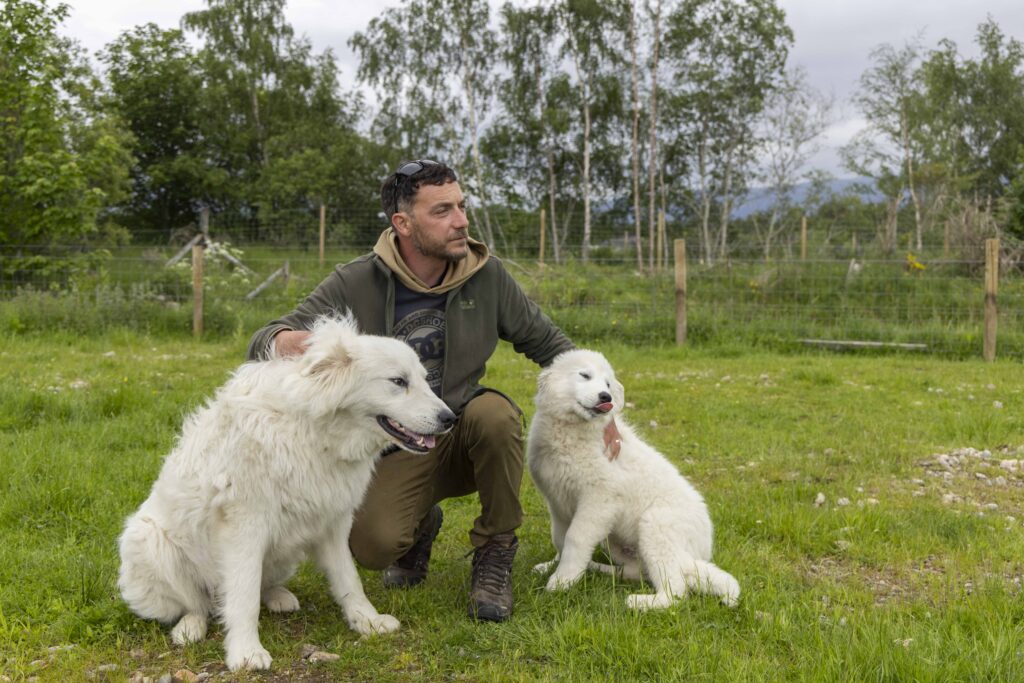
Following a visit to Namibia, where Jonny & Daisy witnessed a project that used livestock guardian dogs to foster coexistence between farmers and cheetahs, the potential for using dogs to help mitigate conflict between livestock and predators in Scotland became immediately apparent.
Gemma Shooter
Gemma studied animal behaviour and for ten years worked as a dog behaviourist. Through volunteering with wolf conservation projects, she learned about techniques for reducing livestock predation, and how this can bring tangible benefits to rural communities. This sparked a passion for solutions-based approaches to human-wildlife coexistence. In 2016, after several years as a zookeeper, Gemma found a role in conservation communications, working with multiple stakeholders who are learning to live alongside recovering wildlife populations.